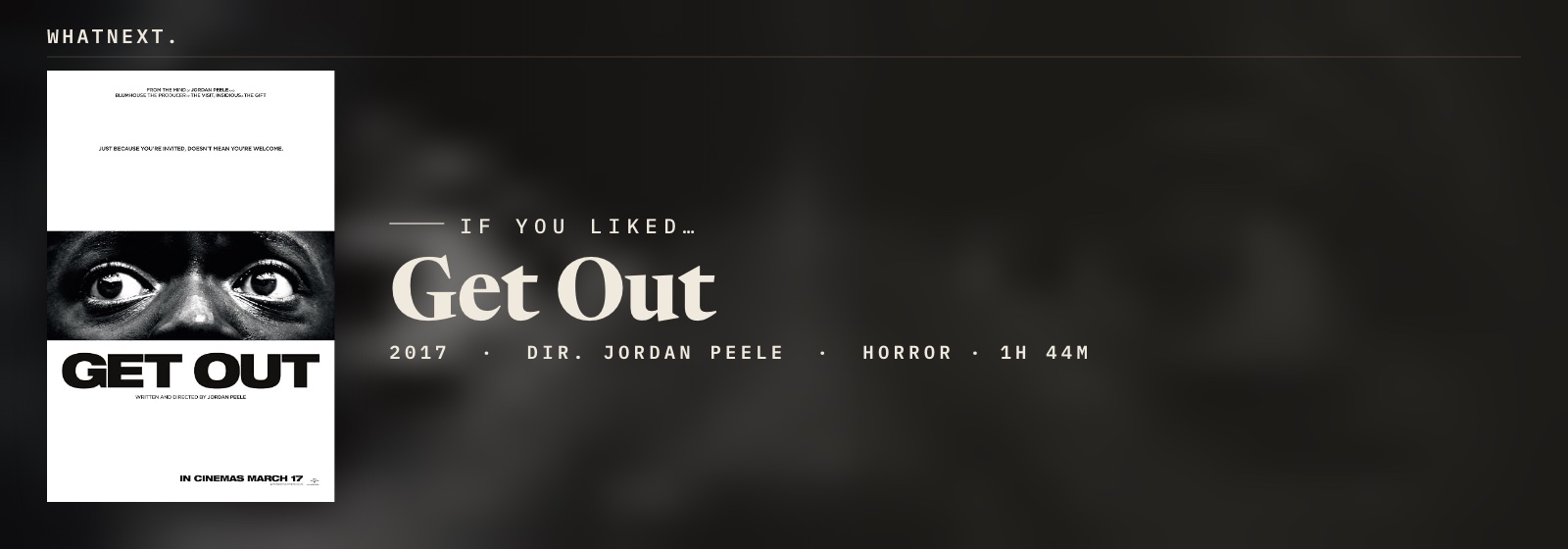
Get Out works by making safety itself the threat. Chris drives out to meet his girlfriend's parents, and every scene plays by the rules of an ordinary, slightly awkward family visit, right up until it doesn't. Nothing about the house looks wrong. That's the point: the horror is in realizing the people smiling at you have already decided what you're for. It's a specific kind of dread, social rather than supernatural, and it's not an easy one to satisfy with the next slasher that comes along.
WhatNext.'s recommendation engine used Get Out as a seed and ranked its catalogue by similarity, filtered down to titles that actually share its horror and social-commentary tags rather than just a "scary movie" grab bag. These four were picked from that ranked list for sharing the same mechanic: an ordinary setting that turns out to be a trap, and a threat that was never hiding, just unnoticed.
The Four Picks
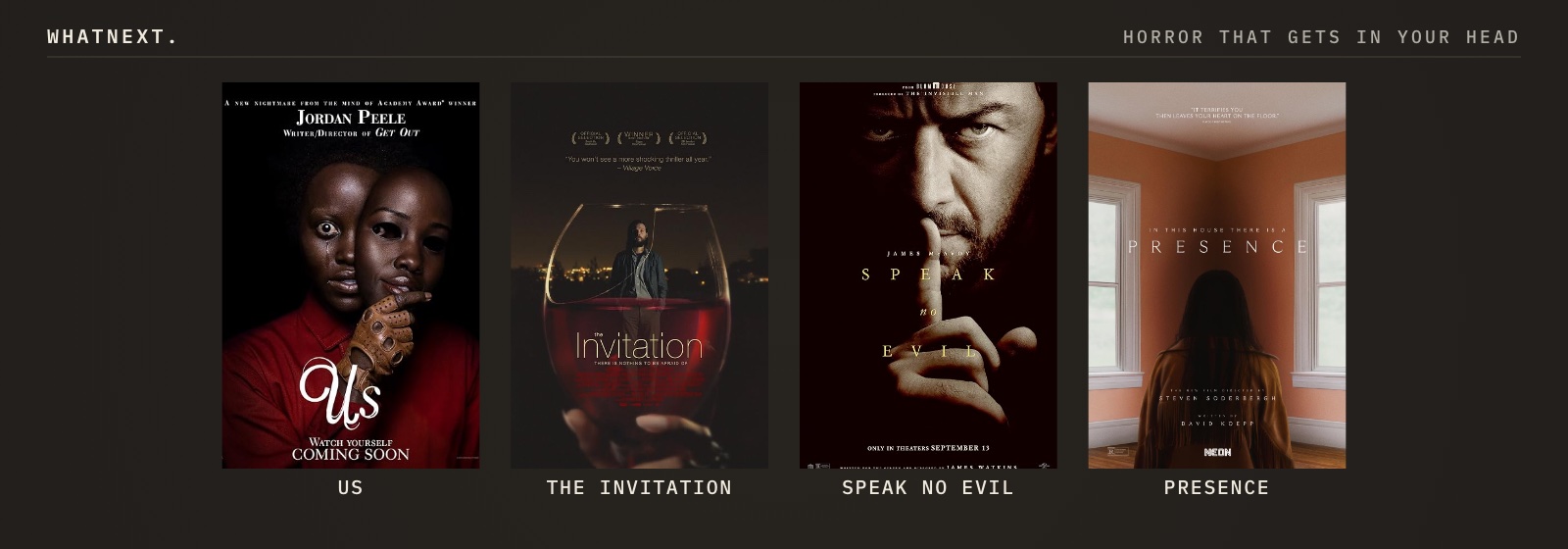
Us is Jordan Peele's own next film, and it takes Get Out's central idea, that the people closest to you might not be who you think, and turns it literal. A family's beach vacation is interrupted by their own doubles, and the home-invasion setup slowly reveals itself as something much stranger and more pointed. It's the most direct connection on this list, not because it shares a plot with Get Out, but because it comes from the same instinct for turning family and home into the site of the threat.
The Invitation builds its dread almost entirely out of a dinner party. A woman is invited back to her ex-husband's house years after their son's death, and something about the new people in his life feels off in a way she can't quite name. Like Get Out, the film spends most of its runtime letting small, deniable wrongness accumulate before it commits to what's actually happening.
Speak No Evil takes the "friendly weekend visit" premise and pushes it past the point most people would call it quits. A family accepts an invitation to stay with a couple they barely know, and each uncomfortable moment gets explained away, one small concession at a time, the same way Chris keeps rationalizing his girlfriend's family right up until he can't anymore.
Presence flips the haunted-house formula by telling the entire story from the perspective of whatever's already inside the house, watching a family move in without being able to warn them. It's a quieter, more melancholic take on the same idea Get Out and the others share: the danger isn't the strange thing arriving, it's the ordinary place already holding it.
A few other titles scored well in the same pool but didn't make the final four. Sleep Tight and The Stepfather both landed even higher on raw similarity, playing the same "someone in the house isn't who they seem" dread from a stalker's or a family impostor's point of view. Absentia and Come to Daddy sit close by too, trading Get Out's social commentary for a more straightforwardly eerie or grief-driven take on the same setup. Any of the four are worth a look next if the picks above land.