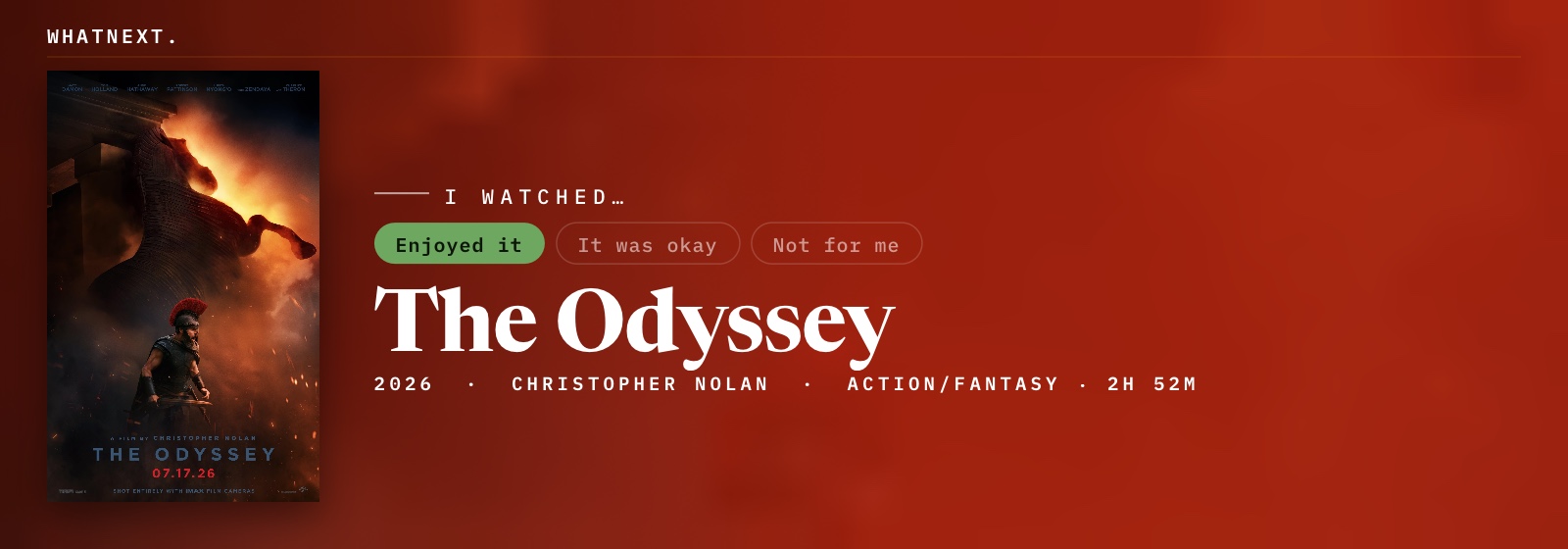
Adapting Homer’s foundational myth for contemporary cinema is a daunting undertaking, but Christopher Nolan approaches The Odyssey with the immense scale and serious ambition the text demands. Spanning the aftermath of the Trojan War and the grueling ten-year journey home to Ithaca, the film seeks to capture the grandeur, terror, and psychological toll of ancient heroism.
What Worked
Visually, the movie is extraordinary. There were multiple sequences where I simply sat back to admire the pure cinematic beauty and scale unfolding on screen. The sacking of Troy sequence towards the end of the film is a masterclass in practical staging, capturing the chaos and fire of the ancient world with astonishing weight.
John Leguizamo is in rare form here, turning in a vibrant, scene-stealing performance that injects urgent energy into the ensemble. Despite the dense tapestry of Greek mythology, the narrative arc remains clear and accessible.
The narrative twist concerning the dissolution of Zeus' law lands effectively, providing dramatic tension to Odysseus' maritime trials. I went back and forth on Nolan's stylistic choice to keep the Olympian gods largely off-screen and ambiguous, but that restrained interpretation ultimately pays off, grounding the supernatural elements in eerie, atmospheric dread rather than camp spectacle.
What Didn't Land
The runtime is noticeably excessive. At well over three hours, the pacing stumbles, particularly in the opening act where rapid scene transitions make the narrative feel like an extended trailer rather than a steady theatrical journey.
Sound mixing clarity is another issue. During the encounter with Polyphemus the Cyclops, the audio processing makes it nearly impossible to realize you are intended to understand the creature's distorted dialogue while he is being blinded.
Furthermore, the screenplay never fully articulates what makes Odysseus uniquely gifted compared to the men he leads, and the dialogue occasionally turns clunky when trying to bridge ancient verse with modern prestige cinema.
Final Thoughts
I genuinely enjoyed The Odyssey. When taking in the sheer totality of its visual craft, practical ambition, and mythic storytelling, its flaws feel minor in comparison to what it achieves. When I posted my initial reaction on TikTok, I noted that its physical scale and tactile atmosphere set it apart from modern blockbuster epics.
It easily earns an "Enjoyed it" verdict. My only regret is not experiencing it on a true 70mm IMAX screen to absorb its visual splendor at full scale.
Stray Observations
- Christopher Nolan's refusal to rely on obvious digital backgrounds gives the Mediterranean voyages a tactile, saltwater grime that modern blockbusters rarely achieve.
- The discourse surrounding IMAX exclusivity for this release felt somewhat pretentious, but the physical photography genuinely benefits from the largest possible screen.
If You Liked This, Try These
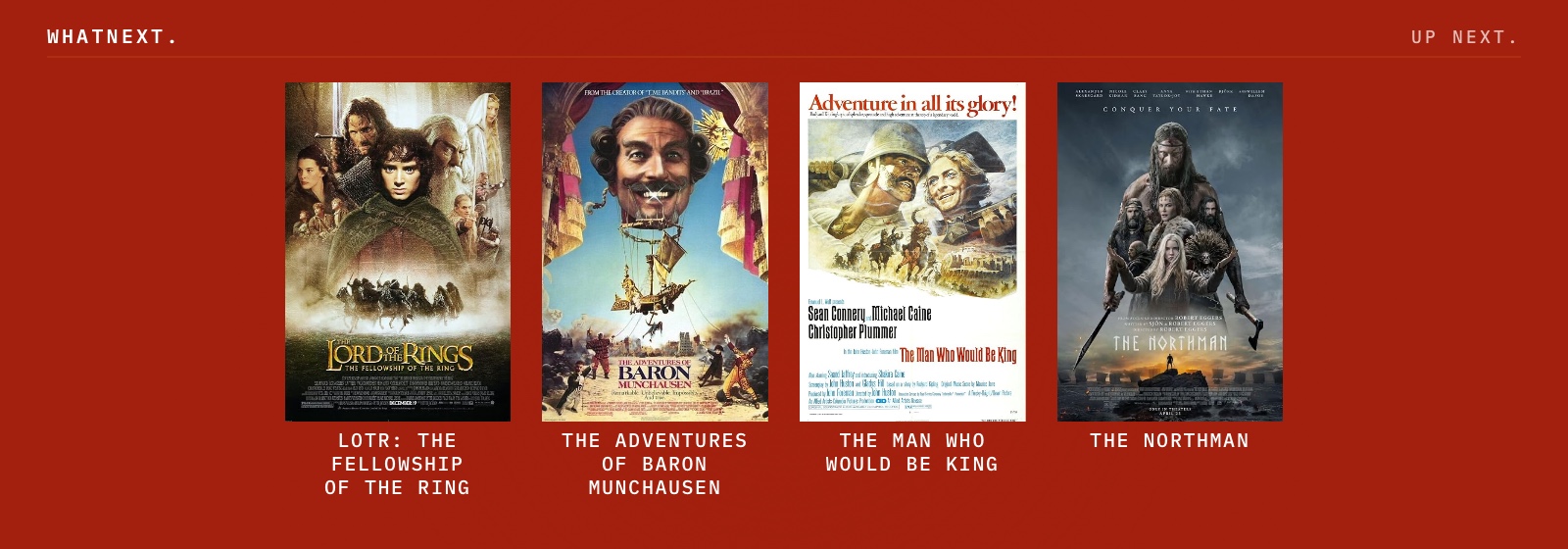
WhatNext.'s recommendation engine matched The Odyssey with four prestige epics that share its mythic grandeur, grueling journeys, and folkloric ambition:
The Lord of the Rings: The Fellowship of the Ring is the definitive modern fantasy epic, balancing intimate character stakes with unmatched worldbuilding and dangerous travel across ancient lands.
The Man Who Would Be King adapts Rudyard Kipling's classic tale of ambition and hubris, pairing Sean Connery and Michael Caine on a grand, tragic adventure into the unknown.
The Adventures of Baron Munchausen offers a visionary, wildly inventive take on mythic storytelling and fantastical voyages from the imagination of Terry Gilliam.
The Northman strips mythology down to its raw, blood-soaked Viking roots, presenting a brutal tale of fate, vengeance, and ancient ritual directed by Robert Eggers.
Additional high-scoring similarity runner-ups include Dragonslayer, Fitzcarraldo, Stardust, The Wandering Earth, and Avatar: The Way of Water.